Jesus and the divine name: 'before Abraham was born, I am'
In John 8:58 Jesus said “before Abraham was born, I am”. How the words echo the name given at the bush, why the crowd took up stones, and what the church holds.
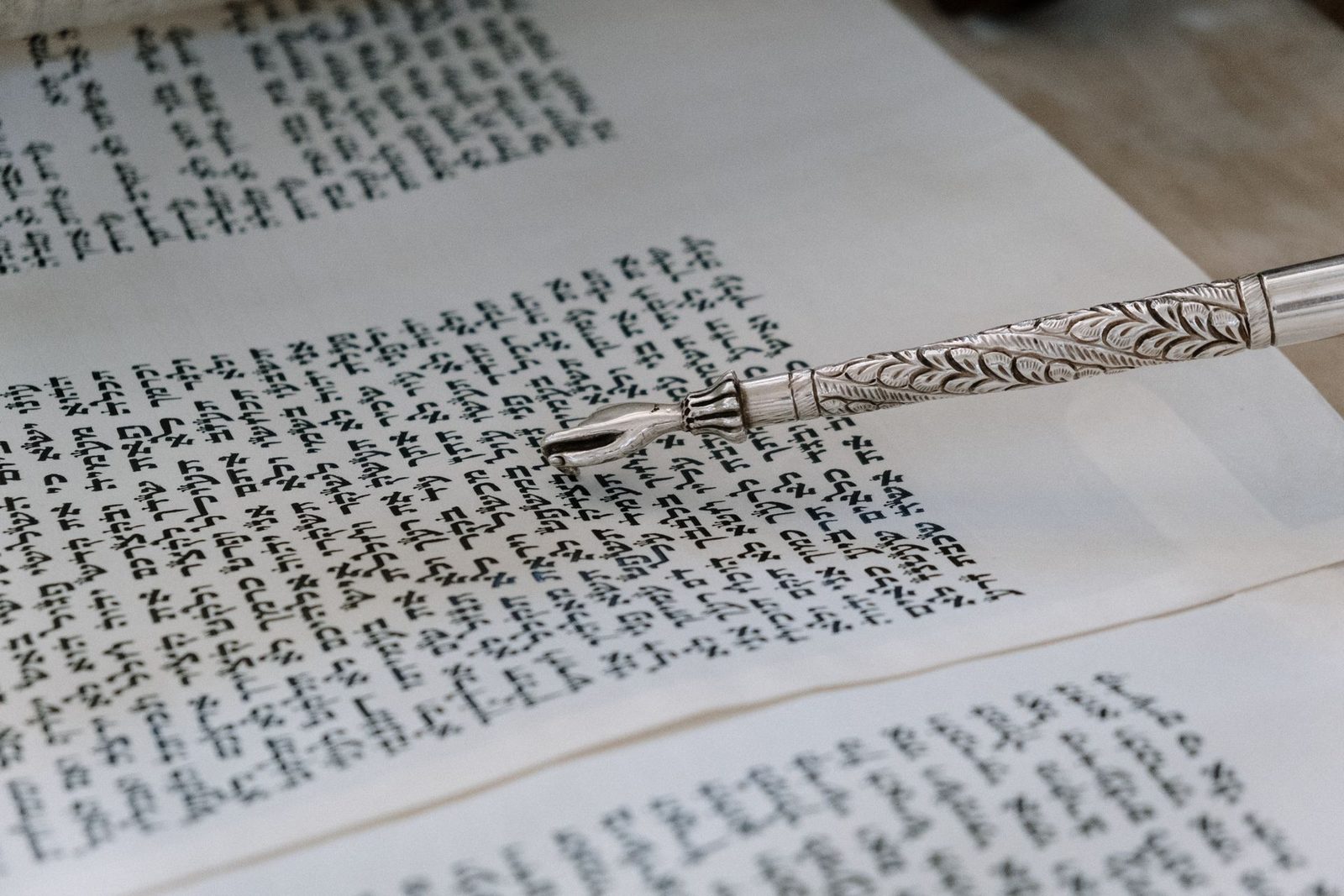
When Jesus said “before Abraham was born, I am” (John 8:58), he was claiming more than a long life. He used the present tense, “I am”, where a past tense would be expected, and in doing so he echoed the words by which God made himself known to Moses at the burning bush, “I AM THAT I AM”, and the repeated “I am he” of the book of Isaiah. His hearers understood him to be claiming the identity of God, and they took up stones to stone him for blasphemy. The Christian church confesses, with the Nicene Creed, that Jesus is the eternal Son of God, “very God of very God”, of one substance with the Father, who became man without ceasing to be God. John 8:58 does not mean that Jesus is the Father; the Father and the Son are distinct persons. It means that the one who spoke to Abraham’s descendants that day was the one who has always been, and who shares the divine name.
The words and the reaction
The saying comes at the end of a long and sharp exchange in the temple courts. Jesus has said that Abraham rejoiced to see his day, and his hearers object that he is not yet fifty years old.
“Truly, truly, I tell you,” Jesus declared, “before Abraham was born, I am!” At this, they picked up stones to throw at Him. But Jesus was hidden and went out of the temple area.
— John 8:58-59 (BSB)
The Greek sets two verbs against each other. Of Abraham it uses a word meaning “came to be”; of Jesus it uses the simple present “I am”, egō eimi. Abraham had a beginning; Jesus speaks as one who has none. The reaction confirms what the hearers understood. Stoning was the penalty the Law prescribed for blasphemy against the name of God, and a mere claim to be old would not have provoked it.
The echo of the bush and of Isaiah
At the bush, God explained his name to Moses with the verb “to be”.
And God said unto Moses, I AM THAT I AM: and he said, Thus shalt thou say unto the children of Israel, I AM hath sent me unto you.
— Exodus 3:14 (ASV)
The Greek Old Testament, which John’s readers knew, rendered God’s words there with egō eimi. The same words appear repeatedly in the second half of Isaiah, where God declares that he alone is God, before all and after all.
Ye are my witnesses, saith Jehovah, and my servant whom I have chosen; that ye may know and believe me, and understand that I am he: before me there was no God formed, neither shall there be after me.
— Isaiah 43:10 (ASV)
In the Greek of Isaiah, “I am he” is again egō eimi. When Jesus uses the same words absolutely, without any predicate, he is placing himself where Exodus and Isaiah place Jehovah: before all things, and the one in whom his people must believe. The entry Exodus 3:14 and Exodus 6:3 explains the meaning of the name at the bush.
Other “I am” sayings in John
John’s Gospel records many sayings in which Jesus says “I am” with a picture attached: the bread of life, the light of the world, the good shepherd, the resurrection and the life. Alongside these are a few sayings where “I am” stands alone. English translations usually add “he”, but the Greek has only egō eimi.
That is why I told you that you would die in your sins. For unless you believe that I am He, you will die in your sins.”
— John 8:24 (BSB)
The most dramatic comes in the garden, when the soldiers come to arrest him.
“Jesus of Nazareth,” they answered. Jesus said, “I am He.” And Judas His betrayer was standing there with them. When Jesus said, “I am He,” they drew back and fell to the ground.
— John 18:5-6 (BSB)
On one level “I am he” is a simple identification. Yet John records that the armed men fell back at the words, a detail that makes sense only if more was said than a name. The Gospel opens with the same claim in plain terms.
In the beginning was the Word, and the Word was with God, and the Word was God.
— John 1:1 (BSB)
Where Christians differ
Among those who hold the Nicene faith there is some discussion about how directly John 8:58 recalls Exodus 3:14. Many scholars think the nearer background is Isaiah’s “I am he”, which itself grows out of the name revealed at the bush. Either way, the claim is to divine identity, and the historic churches, Orthodox, Catholic and Protestant, are united on that.
Others read the verse differently. Jehovah’s Witnesses understand Jesus to have existed as a spirit being, God’s first creation, before he became human, and so they read John 8:58 as a claim to have lived before Abraham rather than a claim to be God; their translation renders it with a past tense. In the fourth century Arius taught something similar, and the Council of Nicaea in 325 answered him by confessing that the Son is “begotten, not made”. This site holds the Nicene position plainly: Jesus is fully God and fully man, one God with the Father and the Holy Spirit. The entry Is Jehovah the same as Jesus? explains how that confession fits with the distinction between the persons.
Reading John 8 with care
A practical way to study the passage is to read the whole of John 8 in one sitting, noting each time Jesus says “I am” and how his hearers respond. Then read Isaiah 43 alongside it. The aim is not to win an argument but to see who Jesus says he is, and to answer as Thomas did at the end of the Gospel, “My Lord and my God”. The New Testament’s use of the title Lord carries the same weight, as The name in the New Testament shows.
For reflection
Pray with John 8:58 in mind, thanking God that the Saviour who came near is the eternal Son who was before Abraham. Say the Nicene Creed with your church and notice how its words about the Son rest on passages like this. Scripture read, prayed and confessed together is where this truth takes root.
References
- The Nicene Creed (325, revised 381), as in the Book of Common Prayer (1662).
- B. F. Westcott, The Gospel According to St. John (1881).
- J. H. Thayer, A Greek-English Lexicon of the New Testament (1889).
- Athanasius, On the Incarnation of the Word (fourth century).
- Matthew Henry, Commentary on the Whole Bible (1708–1710).
Lexicon answers from the Bible and public-domain reference works. It is a study aid and is not affiliated with any organisation.