The seven places where the King James Version prints Jehovah
The KJV usually prints LORD, but in seven verses it prints the name itself. The seven places, what each says, and why the translators let the name stand there.
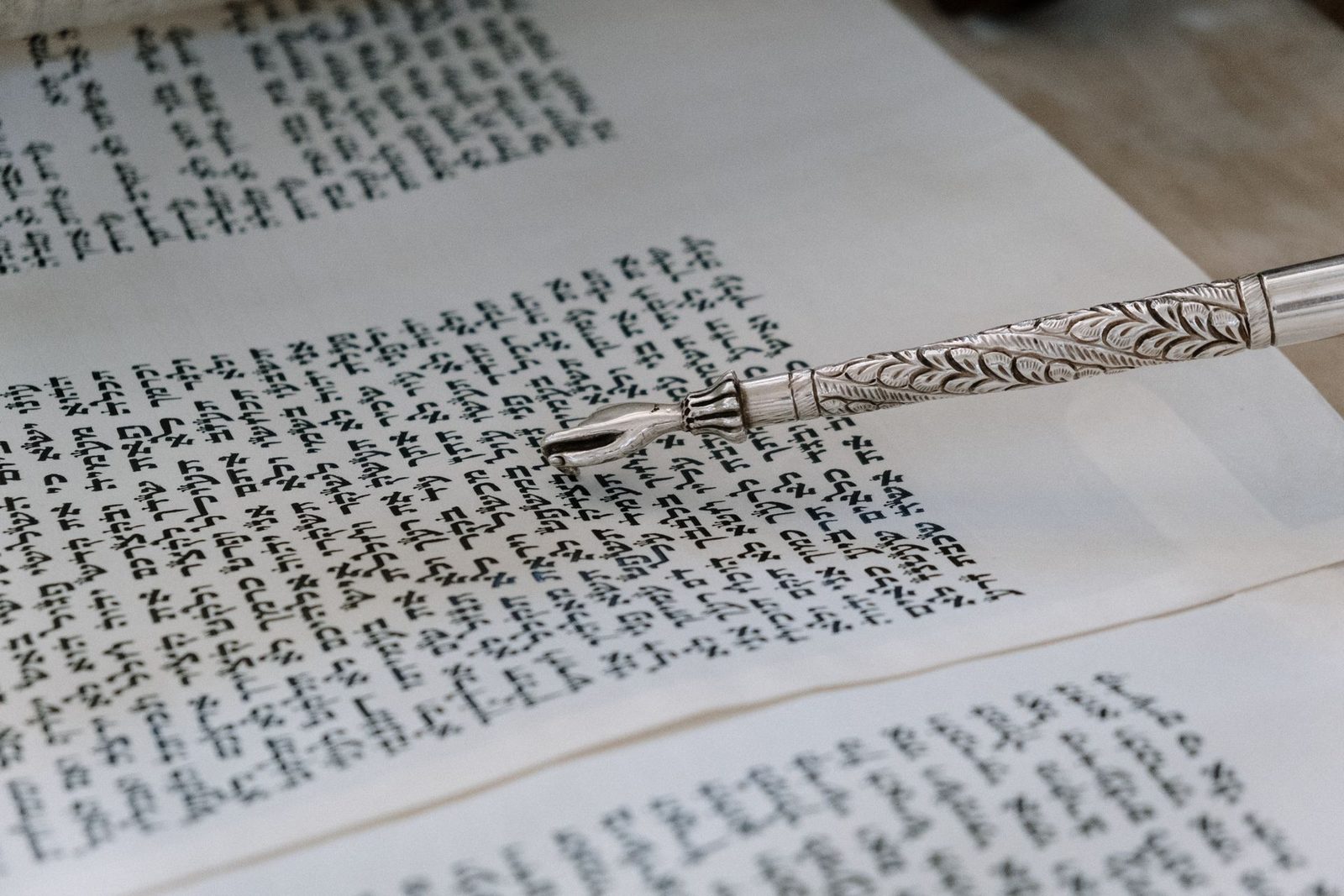
The King James Version of 1611 prints the name Jehovah in seven verses: Genesis 22:14, Exodus 6:3, Exodus 17:15, Judges 6:24, Psalm 83:18, Isaiah 12:2 and Isaiah 26:4. Everywhere else, where the Hebrew has the four-letter name of God, the translators wrote “LORD” in small capitals, following a custom that goes back through the Latin and Greek Bibles to Jewish reading practice. The seven exceptions are not random. In three of them the name forms part of a place or altar name (Jehovah-jireh, Jehovah-nissi, Jehovah-shalom), which the translators kept as names. In the other four the verse is about the name itself, or the Hebrew doubles the name in a way that “LORD” could not carry. Many printed editions set the name in capitals, JEHOVAH, which is why readers often speak of the seven places the KJV prints JEHOVAH. The electronic text used on this site prints it with an initial capital only; the words are the same.
The three altar and place names
The first group of occurrences comes from moments when someone named a place or an altar after what God had done. The translators transliterated these names rather than translating them, so the name of God appears inside them.
And Abraham called the name of that place Jehovah–jireh: as it is said to this day, In the mount of the Lord it shall be seen.
— Genesis 22:14 (KJV)
On Mount Moriah, after God provided the ram in place of Isaac, Abraham named the place “Jehovah will see” or “Jehovah will provide”. The entry Jehovah-Jireh explores that name in full.
And Moses built an altar, and called the name of it JEHOVAH–nissi:
— Exodus 17:15 (KJV)
After the battle with Amalek, when Israel prevailed while Moses’ hands were held up, Moses named the altar “Jehovah is my banner”. The victory was not Joshua’s or Moses’ but the Lord’s, and the altar said so in its name.
Then Gideon built an altar there unto the Lord, and called it Jehovah–shalom: unto this day it is yet in Ophrah of the Abi–ezrites.
— Judges 6:24 (KJV)
Gideon, terrified that he would die because he had seen the angel of the Lord face to face, was told “Peace be unto thee”, and he named his altar “Jehovah is peace”. In each of these three, the translators treated the whole phrase as a proper name, much as they kept Bethel or Beersheba. That is why the name appears here even though the same verses use “Lord” elsewhere.
The four verses about the name itself
The second group is more deliberate. In these verses the translators judged that the reader needed to see the name, because the sentence turns on it.
And I appeared unto Abraham, unto Isaac, and unto Jacob, by the name of God Almighty, but by my name Jehovah was I not known to them.
— Exodus 6:3 (KJV)
Here God contrasts two names, God Almighty and Jehovah. To print “by my name the LORD” would have blurred the contrast, since “Lord” is a title rather than a name. The verse is discussed further in the entry on how the name was revealed in Exodus.
That men may know that thou, whose name alone is Jehovah, art the most high over all the earth.
— Psalm 83:18 (KJV)
Psalm 83 ends with a prayer that the nations will know God by his name. Again the sentence is about the name, and the translators let it stand. The entry Psalm 83:18 looks at the whole psalm.
Behold, God is my salvation; I will trust, and not be afraid: for the Lord Jehovah is my strength and my song; he also is become my salvation.
— Isaiah 12:2 (KJV)
Trust ye in the Lord for ever: for in the Lord Jehovah is everlasting strength:
— Isaiah 26:4 (KJV)
In both Isaiah verses the Hebrew places the short form of the name, Yah, directly before the full four-letter name. Rendering this “the LORD the LORD” would have been awkward, so the translators wrote “the Lord JEHOVAH”, using “Lord” for Yah and the full name for the second word. The entry Isaiah 12:2 and Isaiah 26:4 considers that doubled name.
Why the King James translators usually wrote LORD
The seven exceptions make sense only against the rule. By the time of the King James Version, English Bibles had long rendered the divine name as “LORD”. The practice reflected the Greek Septuagint, which used Kyrios (Lord), and the Latin Vulgate, which used Dominus; both in turn reflected the Jewish custom of saying Adonai (my Lord) instead of pronouncing the name when reading aloud. The King James translators kept this custom but marked it visually: “LORD” in small capitals shows that the Hebrew has the name, while “Lord” in ordinary type translates Adonai. Where the Hebrew has Adonai followed by the name, they printed “Lord GOD”. The entry Why most English Bibles print LORD sets out the convention in detail.
The translators’ own preface, The Translators to the Reader, explains that they did not bind themselves to render every Hebrew word with a single English word in every place. The seven occurrences of Jehovah are an example of that freedom used with care: the rule was kept for the sake of reverence and familiarity, and set aside where the sense required the name to be seen.
A related case is Psalm 68:4, where the KJV has “by his name Jah”. That is the short form of the name rather than Jehovah, so it is not usually counted among the seven, but it shows the same concern to let the name appear where the verse speaks of it.
How to use the seven places in study
The seven verses make a short course on the name of God. Read in order, they move from provision (Genesis 22), through revelation (Exodus 6), victory (Exodus 17) and peace (Judges 6), to the knowledge of God among the nations (Psalm 83), and finally to trust and song (Isaiah 12 and 26). A practical way to use them is to read each verse in its chapter, note what God has just done, and ask what the name is being used to say.
It also helps to remember that the seven places are not the only places where the name stands in the Hebrew. It is there behind every “LORD” in small capitals. The seven verses are windows in the wall, not the whole house. Readers who want to see the name throughout can compare the American Standard Version of 1901, which prints Jehovah wherever the Hebrew has it.
For reflection
Take one of the seven verses each day for a week, and pray it back to God in your own words: the God who provides, who makes himself known, who fights for his people, who gives peace, who is most high, who is strength and song, who is an everlasting refuge. Scripture gives the name so that it may be trusted, and the gathered church, reading and singing these words together, is where that trust is taught and kept.
References
- The Translators to the Reader, preface to the Authorised Version (1611).
- Brown, Driver and Briggs, A Hebrew and English Lexicon of the Old Testament (1906).
- F. H. A. Scrivener, The Authorized Edition of the English Bible (1611), its Subsequent Reprints and Modern Representatives (1884).
- The Preface to the American Standard Version (1901).
- Matthew Henry, Commentary on the Whole Bible (1708–1710).
Lexicon answers from the Bible and public-domain reference works. It is a study aid and is not affiliated with any organisation.