Yahweh Shammah Meaning: The LORD Is There
Yahweh Shammah means "The LORD is there" — the name of Ezekiel's visionary city. What it meant for exiles, and what it means for God's people now.
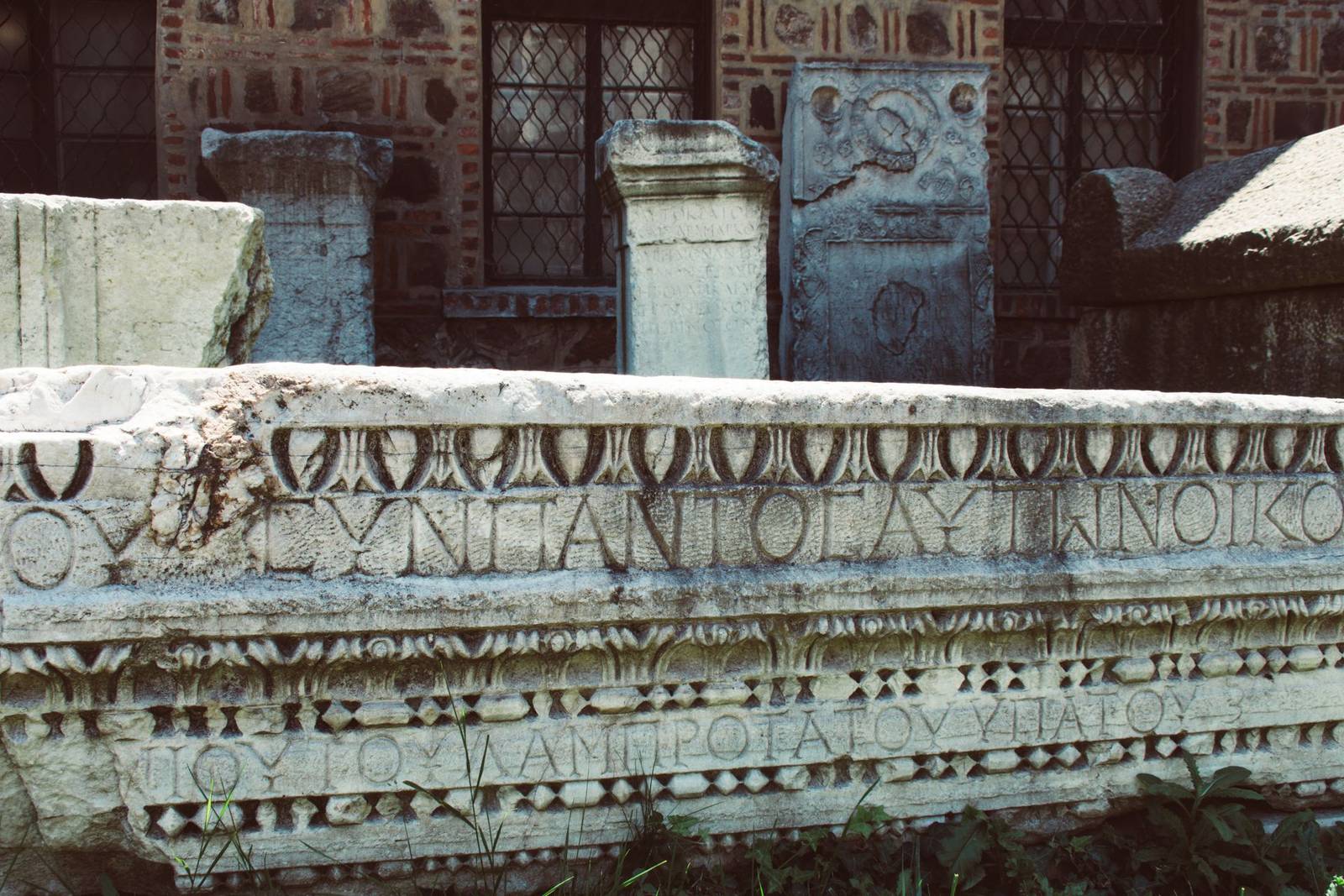
Yahweh Shammah means “The LORD is there.” It comes from the closing verse of Ezekiel, where the prophet is shown a rebuilt city and told its name: “The perimeter of the city will be 18,000 cubits, and from that day on the name of the city will be: THE LORD IS THERE.” That is Ezekiel 48:35 in the Berean Standard Bible. The Hebrew behind “the LORD” is the divine name, often written YHWH and rendered “Jehovah” in older English versions. So the compound is sometimes spelled Jehovah-shammah, and it means exactly what it sounds like: the presence of God is the city’s identity.
It is worth noticing what kind of name this is. Other compound names in Scripture record something God did — Jehovah-jireh, “the LORD will provide,” marks the mountain where Abraham received a ram (Genesis 22:14). Yahweh Shammah is different. It is not a memorial to a past act. It is a name given to a place, and it describes a settled condition: God is there, and therefore everything about that city is defined by Him.
What is the context of Ezekiel 48:35?
Ezekiel was a priest among the exiles in Babylon. He had seen the temple in Jerusalem, and he had also seen, in vision, the glory of the LORD withdraw from that temple before the city fell (Ezekiel 10–11). For a people whose whole faith was tied to a place, that was devastating. The question hanging over the exiles was simple: is God still with us, or has He stayed behind in a ruined city?
Ezekiel’s final chapters answer that question with a long, careful description of a restored temple, a restored land, and a restored city. The book that began with heaven opened ends with a city named for God’s presence. The last word of Ezekiel is not judgment. It is location: He is there.
Why does the name matter so much?
Because the Bible’s story is, in large part, the story of God choosing to dwell with His people. He walked with Adam and Eve. He met Abraham. He filled the tabernacle and then the temple. He promised, through Jeremiah, that He is a God “nearby and not only far away” (Jeremiah 23:23). When Solomon asked whether God could really dwell in a house on earth, he knew the answer was no — “the heavens, even the highest heavens, cannot contain You” (1 Kings 8:27) — and yet God graciously chose to be present with His people anyway.
So Yahweh Shammah is not a claim that God is contained in a city. It is a claim that God has chosen to be found there. The name is a promise in one word: presence.
How is Yahweh Shammah different from other compound names?
Most of the compound names of God are attached to an event or a need.
- Jehovah-jireh (Genesis 22:14) — the LORD provides; born out of Abraham’s test on Moriah.
- Jehovah-nissi (Exodus 17:15) — the LORD is my banner; raised after a battle.
- Jehovah-shalom (Judges 6:24) — the LORD is peace; named by Gideon at an altar.
- Jehovah-rapha (Exodus 15:26) — the LORD who heals; given in the wilderness.
Yahweh Shammah is the only one of these that names a city rather than an altar or an event. It is also the only one that closes a book of the Bible. The others tell us what God does in a moment. This one tells us where God will be forever.
A note on the spelling: Hebrew names built on the divine name often appear in English as either “Jehovah-” or “Yahweh-.” The underlying consonants are the same. “Jehovah” is the older English form, familiar from the King James Version; “Yahweh” is the form most scholars now prefer as a reconstruction of the original pronunciation. Both point to the same name, and this site treats them as two English spellings of one Hebrew word.
Where does the Bible say God is present with His people?
Ezekiel 48:35 is not an isolated idea. It gathers up a theme that runs from Genesis to Revelation.
God is our refuge and strength, an ever-present help in times of trouble. — Psalm 46:1 (BSB)
Psalm 46 goes on to describe a city that cannot fall because God is within her (Psalm 46:4-5), and it repeats the refrain, “The LORD of Hosts is with us; the God of Jacob is our fortress” (Psalm 46:7). That is the same confidence Ezekiel’s city embodies.
David asked where he could go to escape God’s presence and concluded that there is nowhere — not heaven, not Sheol, not the far side of the sea (Psalm 139:7-10). Paul told the Athenians that God “is not far from any of us” (Acts 17:27). And the New Testament ends with the loudest possible echo of Ezekiel’s name: “Behold, the dwelling place of God is with man, and He will dwell with them” (Revelation 21:3).
What does Yahweh Shammah mean for Christians now?
It means the presence of God is not a reward you earn by going to the right place. It is a gift He gives to a people He has chosen. Jesus is the fullest expression of that gift: “The Word became flesh and made His dwelling among us” (John 1:14). After His resurrection He promised that He would be with His disciples always, to the very end of the age (Matthew 28:20).
So the name has three practical edges for the believer.
First, it corrects the idea that God is only found in certain buildings or certain moods. He is present with His people wherever they gather in His name, and He is present with the believer who is alone.
Second, it comforts the exile. Ezekiel’s first readers were far from home. The name told them that distance from Jerusalem was not distance from God. The same is true for anyone who feels far from where they thought they would be.
Third, it points forward. Every earthly city of God is a shadow of the final one. Yahweh Shammah is not finally about a plot of land in the Middle East. It is about a day when God’s presence will no longer be mediated through temple, prophet, or promise, but will be the atmosphere His people live in.
How should this name shape the way we pray and read Scripture?
It is worth praying the name back to God. When you feel that your circumstances have pushed you out of His reach, you can say, in effect, “You are the God who is there.” That is not a formula. It is a confession of faith drawn from Scripture.
It is also worth reading Ezekiel 40–48 slowly. The measurements and lists can feel tedious, but they are the architecture of a promise: God is describing a place He intends to fill. The last line is the point of the whole book. Everything else is the house; the name is the occupant.
If you want to go further, read Psalm 46 and Psalm 139 alongside Ezekiel 48. Notice how the same confidence appears in three very different settings: a song of war, a song of wonder, and a vision of a city. The God who is there is there in all of them.
Finally, take this to a local church. The name Yahweh Shammah is given to a city, not to a solitary individual. God’s presence is promised to His gathered people, and it is among them — in preaching, in the Lord’s Supper, in prayer and singing — that the promise is most plainly kept. Speak with a pastor or a trusted believer about what it would look like to live as someone whose identity is not “I am where I am” but “the LORD is there.”
Questions readers ask
What does Yahweh Shammah literally mean?
It means “The LORD is there.” The first part is the divine name (YHWH, rendered “Jehovah” in older English Bibles), and the second part comes from the Hebrew word for “there.” The full phrase appears at the end of Ezekiel 48:35 as the name given to the visionary city.
Is it Jehovah Shammah or Yahweh Shammah?
Both spellings refer to the same Hebrew name. “Jehovah” is the older English form used in the King James Version and in many traditional compound names; “Yahweh” is a modern scholarly reconstruction of the original pronunciation. Neither spelling changes the meaning.
Where is Yahweh Shammah in the Bible?
It appears once, in Ezekiel 48:35, the final verse of the book. Ezekiel is describing a restored city in vision, and the closing line gives the city its name: “THE LORD IS THERE.” The theme of God’s presence with His people runs throughout Scripture, but this exact title is unique to that verse.
Does Yahweh Shammah mean God is present everywhere or in one place?
Scripture teaches both. God is everywhere present in His knowledge and power (Psalm 139:7-10; Acts 17:27), and He also chooses to dwell in a special way with His people. Yahweh Shammah names the second truth: God has committed Himself to be with those He has redeemed, and that commitment will be fully seen in the New Jerusalem (Revelation 21:3).
Lexicon answers from the Bible and public-domain reference works. It is a study aid and is not affiliated with any organisation.