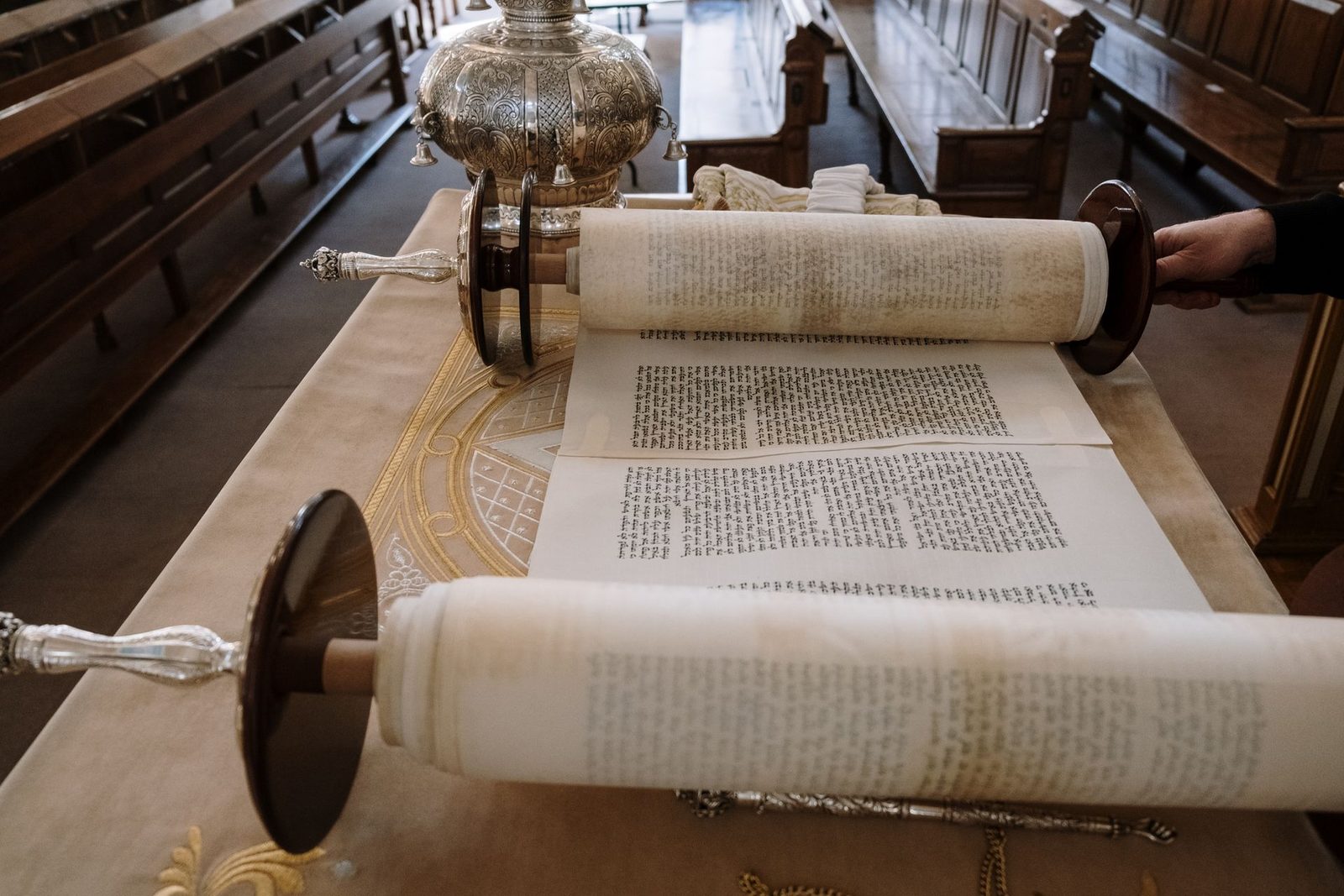
No. The Tetragrammaton is not evil. It is the four-letter Hebrew name of God — YHWH — revealed to Moses at the burning bush and used thousands of times in the Hebrew Scriptures. The name itself is holy, not cursed. What can become sinful is not the letters but the use we make of them: swearing falsely by the name, treating it as a charm, or turning it into a weapon against other believers.
If you have been told that the name is demonic, or that writing or speaking it invites harm, that claim does not come from the Bible. Scripture treats the divine name as a gift, a refuge and a confession of faith. The command is not never to say it, but never to take it in vain (Exodus 20:7).
What exactly is the Tetragrammaton?
The word tetragrammaton is Greek for four letters. Those four Hebrew consonants are usually written YHWH, and sometimes JHVH. Because ancient Hebrew was written without vowels, and because Jewish readers began substituting Adonai (Lord) when reading aloud, the original pronunciation was eventually lost. The English form Jehovah arose in the Middle Ages when the consonants of YHWH were combined with the vowels of Adonai. Yahweh is the form most scholars now prefer, though it too is a reconstruction.
The name appears in the opening words of the Ten Commandments and throughout the Law, the Psalms and the Prophets. It is the name by which God made Himself known:
God also told Moses, “Say to the Israelites, ‘The LORD, the God of your fathers—the God of Abraham, the God of Isaac, and the God of Jacob—has sent me to you.’ This is My name forever, and this is how I am to be remembered in every generation.” — Exodus 3:15 (BSB)
That is the Berean Standard Bible, which renders the name as LORD in small capitals. The King James Version and the American Standard Version often print it as JEHOVAH or Jehovah instead. Where this article quotes those older translations, the reader will see the name spelled out; where it quotes the BSB, the reader will see LORD. Either way, the underlying Hebrew is the same four letters.
Does the Bible ever call the name itself dangerous?
No. The Bible calls the name holy, great, awesome, worthy of praise and a strong tower. It never calls it evil, unclean or demonic. What Scripture warns against is misuse.
The third commandment is the key text: “You shall not take the name of the LORD your God in vain, for the LORD will not leave anyone unpunished who takes His name in vain” (Deuteronomy 5:11, BSB). The Hebrew word behind vain carries the sense of emptiness, worthlessness, falsehood. The command forbids empty oaths, using God’s name to endorse a lie, and hollow religion that names God while ignoring Him. It does not forbid reverent use of the name.
Leviticus 24:16 prescribes a penalty for one who blasphemes the name of the LORD — that is, curses it. The verse assumes the name exists, is known, and can be honoured or dishonoured. A name that could not be spoken at all could hardly be blasphemed.
Here is the same warning in a translation that prints the name itself:
Thou shalt not take the name of Jehovah thy God in vain; for Jehovah will not hold him guiltless that taketh his name in vain. — Deuteronomy 5:11 (ASV)
So the danger runs the opposite way from the rumour. The danger is not that the four letters carry a curse. The danger is that a sinner can drag a holy name through the mud.
Why do some people think the name is evil?
A few reasons circulate, and it helps to name them plainly.
First, some confuse the name with the occult. Because certain magical traditions have borrowed divine names as incantations, people sometimes assume the name itself belongs to that world. But a borrowed word does not become evil because a false religion misuses it. The Psalms use the name in worship, not in spells.
Second, some worry that pronouncing the name breaks Jewish tradition. Out of reverence, Jewish readers stopped saying the name aloud centuries ago and read Adonai instead. That is a tradition of respect, not a biblical command. Christians have historically differed on whether to say Yahweh in reading. Either way, the tradition does not make the name itself sinister.
Third, and most painfully, some have been taught that anyone who uses the name belongs to a cult. That is a serious charge, and it is simply false as stated. Millions of Christians across history have sung, prayed and translated the name without belonging to any sect. The name is not a marker of a movement; it is a marker of God.
If you have been frightened by teaching that the name is demonic, that fear is not from Scripture. Paul reminds Timothy that God has not given His people a spirit of fear, but of power, love and sound judgment (2 Timothy 1:7).
What does the New Testament do with the divine name?
The New Testament writers, writing in Greek, usually render the Hebrew name with kyrios, the word for Lord. But they do not treat the name as a problem. They apply Old Testament name-texts to Jesus. Joel 2:32 says that everyone who calls on the name of the LORD will be saved. Paul quotes that verse in Romans 10:13 and applies it directly to Christ. Peter does the same at Pentecost.
Philippians 2:9-11 goes further: God has highly exalted Jesus and given Him the name above all names, so that every knee should bow and every tongue confess that Jesus Christ is Lord. The name of God and the name of Jesus are not rivals. In the New Testament, the divine name is where salvation is found, not where danger lurks.
This is why Jesus taught His disciples to pray, “Our Father in heaven, hallowed be Your name” (Matthew 6:9, BSB). The first petition of the Lord’s Prayer is that God’s name be treated as holy — the exact opposite of the fear that the name is evil.
How should I use the name, then?
Reverently, truthfully and without superstition.
- Reverently. Say it in prayer and praise, not as a casual exclamation. Malachi 3:16 pictures a book of remembrance written for those who feared the LORD and honoured His name.
- Truthfully. Never use the name to back a lie, a promise you will not keep, or a claim about God He has not made.
- Without superstition. The name is not a talisman. Writing it, typing it or reading it aloud does not summon anything. It is a name, and names are for knowing the person who bears them.
- Without weaponising it. The name is not a test of orthodoxy you can use to condemn other believers. 3 John 1:11 says, “Beloved, do not imitate what is evil, but what is good. The one who does good is of God; the one who does evil has not seen God.” That verse is about conduct, not vocabulary.
Does this mean every use of Jehovah is fine?
It means the form of the name is not the issue. Whether you say Yahweh, Jehovah, or LORD, you are referring to the God of Abraham, Isaac and Jacob, the God and Father of our Lord Jesus Christ. The English form Jehovah has a long history in hymnody and in the King James tradition. It is a translation choice, not a spiritual condition.
What matters is who you are naming and how you are living before Him. A person can say Yahweh all day and dishonour Him, or say LORD all day and love Him. The letters are not the measure. The heart is.
Where does this leave someone who is afraid?
If you have been taught that the Tetragrammaton is evil, you do not need to fear it. You need to know the One who bears it. Read Exodus 3 slowly. Read Psalm 83:18, which says plainly that people may know that God, whose name is the LORD, is the Most High over all the earth. Read Philippians 2 and see the name exalted, not cursed.
Pray. Ask God to teach you to hallow His name rather than fear it. And take this question to a pastor or a mature believer in your local church, someone who can read the Hebrew and Greek with you and answer your specific worries face to face. This is not a question to settle alone at a screen.
If your fear has grown into something darker — if you are having thoughts of harming yourself, or you feel you cannot go on — please reach out now. In the United States and Canada call or text 988. In the United Kingdom and Ireland call Samaritans on 116 123. In Australia call Lifeline on 13 11 14. Anywhere else, visit findahelpline.com or call your local emergency number.
The name of God is not a threat hanging over you. It is the name under which you are invited to hide.
Questions readers ask
Is the Tetragrammaton the same as Jehovah?
Yes, essentially. The Tetragrammaton is the four Hebrew consonants YHWH. Jehovah is an English form of that name, produced by combining those consonants with the vowels of Adonai. Yahweh is another reconstruction. All three refer to the same divine name.
Is it a sin to say Yahweh or Jehovah out loud?
No. Scripture commands that the name not be taken in vain, meaning it should not be used falsely or emptily. Reverent speech is never forbidden. Jewish tradition stopped pronouncing the name out of respect, but that is a custom, not a biblical command.
Why do some translations print LORD instead of the divine name?
Most modern translations follow the ancient Jewish practice of reading Adonai (Lord) in place of the name, and so print LORD in small capitals. The King James Version and the American Standard Version often print Jehovah instead, which makes the underlying Hebrew name visible to English readers.
Does using the divine name mean I belong to a cult?
No. Christians across many centuries and traditions have used, sung and translated the divine name without belonging to any sect. The name is not a marker of a movement. What matters is whether you trust the God who bears it and follow His Son.
Lexicon answers from the Bible and public-domain reference works. It is a study aid and is not affiliated with any organisation.